Is India’s Judicial System Collapsing Under Its Own Weight?
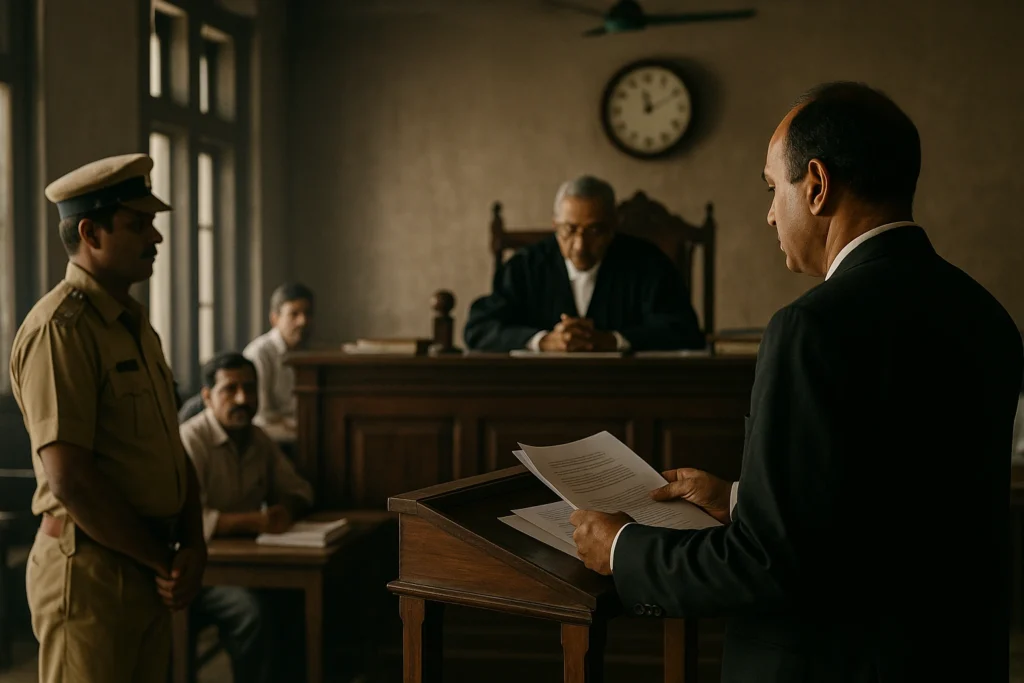
A judge hears a case in a crowded Indian courtroom—an everyday reflection of the delays fueling the India judicial crisis.
The India judicial crisis is no longer a slow-burning issue—it’s a full-blown national concern. In a dusty courtroom in rural Bihar, a land dispute case filed in the 1990s remains unresolved. The original petitioner has passed away, and now his son attends the hearings, still hoping for progress. Nothing moves. And sadly, no one is surprised. In a dusty court office somewhere in rural Bihar, there’s a land dispute case that’s older than some of the lawyers working on it. The original petitioner has passed away. His son, now in his late fifties, still makes the monthly trip to check if anything has moved. It hasn’t. No one is surprised. That’s just how things are.
We’ve grown so used to justice being slow in this country that delay has almost become a legal principle. People say “the system is broken” like they say “it’s too hot today”—with a shrug, not anger. But maybe it’s time we actually looked at what that broken system looks like.
Because the India judicial crisis isn’t just a matter of delays. It’s a quiet erosion of faith.
Table of Contents
Too Many Cases, Too Few Hands Inside India Judicial Crisis
India has over 5 crore pending cases across its judicial structure, from the smallest trial court to the Supreme Court. That number—five crores—sounds massive, because it is. And the reasons behind it aren’t mysterious.
We simply don’t have enough judges. Less than 25 judges per million people, to be precise. Think about that. In a country of 1.4 billion, that’s like running a hospital with one doctor for every 60,000 patients.
And yet, the real tragedy isn’t the number. It’s the normalcy. We’ve accepted it.
The Waiting Room That Never Ends
Most of the backlog sits in the lower courts. That’s where ordinary citizens go—to fight over property, pensions, dowry harassment, tenant disputes. These are not fancy cases involving celebrities or politicians. They’re basic issues that define lives under the Indian judicial crisis.
But the people who walk into those courtrooms—many of them poor, elderly, or illiterate—often come out with nothing but a new date. And then another. And then another.
Ask anyone who’s spent more than a year dealing with the courts. They’ll tell you the same thing: “We aren’t fighting the case—we’re fighting the delay.”
Undertrials: Punished Before Proven Guilty
A huge chunk of India’s prison population consists of undertrials—people who haven’t been convicted yet, but are behind bars anyway. Some of them stay locked up for years just waiting for a charge sheet to be filed.
What’s worse? Many of them were arrested for minor offenses. A fight over a goat. A scuffle at a market. Cases that might be thrown out if heard promptly—but instead, the accused languish in jail while the paperwork crawls.
This is what the India judicial crisis really looks like: people stuck in legal purgatory, without justice, without hope.
You can also read EV Growth in India: How a Quiet Shift Is Changing Roads, Jobs, and Habits.
Justice for the Rich Moves Faster
Let’s not pretend the system treats everyone the same.
When a Bollywood actor is arrested, bail hearings are listed the next morning. Special benches are set up. Entire legal teams fly in. Cameras roll.
But when a widowed schoolteacher in a tier-3 town files a case for her unpaid pension, she waits. Months. Sometimes years. No headlines. No urgency.
It’s not just slow—it’s unequal. And when the public starts seeing courts as places where power matters more than law, something breaks. Not just in the system—but in society.
Has Technology Helped? Sort of.
COVID-19 forced the courts to go digital—at least in part. E-filings. Video hearings. Online cause lists. For urban lawyers, it was a shift that brought convenience.
But the digital revolution hasn’t quite reached the mofussil towns. There, internet signals drop. Files still travel by hand. Judges scribble orders in ink. Most litigants don’t even know what “virtual court” means.
Tech can help. But not if half the country can’t access it. The India judicial crisis needs more than just apps. It needs will.
Why Isn’t It Being Fixed?
That’s the question everyone asks. If we know the problems—shortage of judges, poor infrastructure, outdated procedures—why not fix them?
The answers are complicated. Judicial appointments are slow. The executive and judiciary are often at odds. The Collegium system, meant to ensure independence, works in secrecy and rarely explains itself. Add to that bureaucratic inertia, and you’ve got a perfect recipe for inaction.
Worse still, there’s almost no accountability. A case being delayed 15 years doesn’t make news unless someone dies waiting.
What Does It Do to People?
People don’t always lose cases. Sometimes, they just give up. They stop showing up in court. They sell disputed land at a loss. They settle out of exhaustion, not agreement.
That’s the emotional cost nobody measures. And it’s real.
Justice, at its heart, is supposed to offer closure. But for millions in India, the court system does the opposite—it keeps wounds open. The India judicial crisis isn’t just procedural. It’s deeply personal.
You can also go through ‘Criminal justice system in India is facing a crisis with 58.4 million pending cases’.
Can This Be Turned Around?
It can. But it will take more than token steps.
We need to double the number of judges—and do it urgently. Invest in court infrastructure, especially in lower courts. Make digital tools universal. Fill vacancies without bureaucratic games. And for once, make justice feel accessible again.
Above all, we need the system to move.
Because the longer it stays stuck, the more people it leaves behind.