Why Tier-2 Cities Are India’s Unexpected Startup Goldmine in 2025
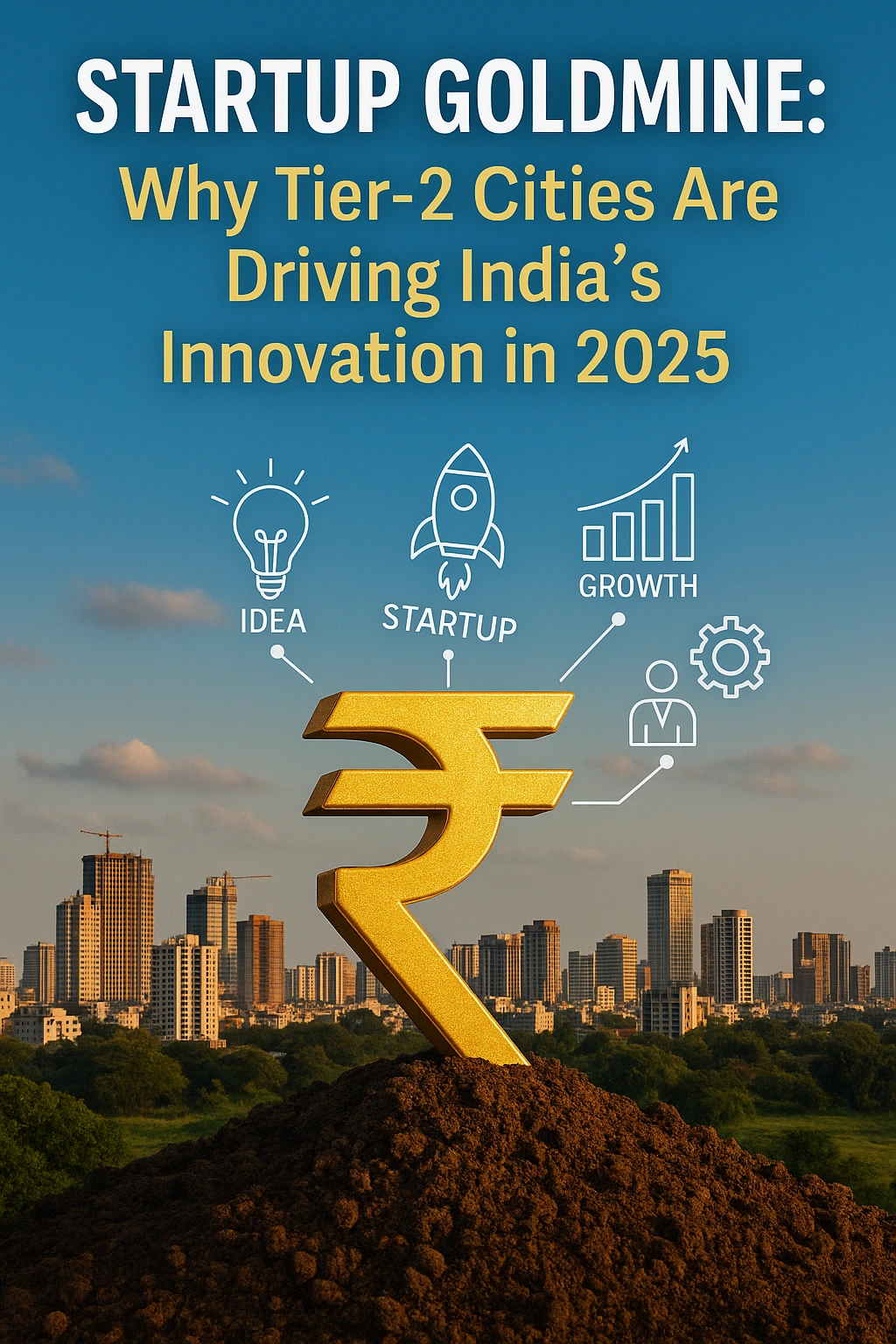
A golden rupee symbol rises from the ground against the skyline of a Tier-2 Indian city, representing the economic and startup growth emerging beyond metros in 2025.
It didn’t happen all at once. You wouldn’t have noticed it while walking past glitzy glass offices in Bengaluru or Gurgaon. But slowly, and almost quietly, a shift began.
Today, in 2025, India’s most exciting startup action isn’t where you’d think. It’s not in your Koramangalas or CyberHubs. It’s in Coimbatore. In Indore. In Bhubaneswar.
Yes, Tier-2 cities are turning into the next big startup goldmine—and they’re doing it without needing permission from metro gatekeepers.
Table of Contents
1. The Pandemic Changed More Than Just Offices
Let’s be honest: the pandemic forced everyone to re-evaluate. The idea that you had to be in a metro to build something real? That myth collapsed.
During those long months of lockdown, founders realized that great ideas didn’t need posh pin codes. More importantly, neither did customers—or teams.
So, when rents soared post-pandemic and VC money tightened, many quietly packed up their co-working desks in Delhi and shifted home. Not to give up—but to begin again.
Often, that “home” was a Tier-2 city. And it worked.
2. Lower Costs, Higher Runway
It’s not glamorous, but the numbers speak. Rent in a Tier-2 city is about half—or even less—of what you’d pay in Mumbai or Bengaluru. That’s not a footnote; that’s your extra six months of survival.
Add lower salaries (but loyal employees), cheaper living expenses, and even friendlier local taxes or subsidies—and suddenly, you’re sitting on a startup goldmine.
This isn’t about cutting corners. It’s about buying time. And in a funding-scarce world, time is gold.
3. Talent Doesn’t Just Live in Metros Anymore
Here’s something nobody in metro boardrooms likes to admit: smart people live everywhere.
Whether it’s a Java developer in Gwalior or a product designer in Madurai, Tier-2 talent is deep—and often overlooked.
Better still? They’re hungry. They’re not hopping between startups for 20% salary hikes. They want to grow with the company. They’re invested. And that’s rare.
In fact, many startups find that building from Tier-2 cities brings them closer to the kind of people who build, not just talk.
4. Close to the Customer, Not Just the Cloud
You know what you can’t learn sitting in a WeWork in Bandra? How a farmer in Nashik pays bills. Or what an MSME owner in Kanpur really needs from a fintech app.
Startups born in Tier-2 cities don’t need to guess. They see the problems. They are the user. This closeness isn’t just an advantage—it’s a moat.
Whether it’s vernacular content, hyperlocal delivery, or credit scoring for small-town sellers, startups grounded in these cities are solving for the real India.
And that’s what makes a true startup goldmine.
5. Governments Are Finally Showing Up
Five years ago, state startup policies were mostly PowerPoint dreams. Now? They’re real.
Madhya Pradesh reimburses incubation costs. Tamil Nadu gives direct grants to early-stage startups. Assam is running rural innovation bootcamps. And even Tier-2 municipal bodies are offering internet subsidies and office space.
What once felt like bureaucratic lip service is now genuine support—and smart founders are taking it.
6. Investors Are Catching On (Slowly)
Sure, most big VC cheques still land in metro startups. But the game is changing.
Local angel networks in places like Jaipur and Kochi are getting active. Micro VCs are investing in B2B startups from Vadodara. Accelerators in Patna and Surat are popping up.
And the best part? Tier-2 founders are learning to grow without waiting for Silicon Valley validation. They’re scrappy. They’re solving. And they’re profitable.
More investors are now scouting beyond the metros, realizing that the next startup goldmine might just be hidden in cities they once overlooked. As infrastructure improves and digital access widens, these smaller hubs are proving they have everything it takes to support innovation. Ignoring them in 2025 would mean missing out on India’s most promising entrepreneurial shift.
That’s a goldmine, any way you slice it.
Also read our article on Urgent Truth: The AI Impact on Global Jobs Is Bigger Than You Think.
7. It Just Feels…Healthier
Not every founder wants to live in traffic, drown in pitch events, or breathe smog. Some want to build a great product, go home to their kids, and sleep 8 hours a night.
Tier-2 cities make that possible.
They offer balance—not as a buzzword, but as a lived experience. Founders here often stay longer, burn out less, and build deeper.
Maybe that’s why, in 2025, the startup goldmine is less about blitzscaling and more about real scaling—sustainably, quietly, effectively.
You may also read India’s Startup Shift: The Rise of Tier 2 and Tier 3 Cities.
So, What Does This Really Mean?
It means we need to stop asking when Tier-2 cities will catch up. They already have.
The startup scene in places like Ranchi, Amritsar, and Mysore isn’t “emerging” anymore. It’s here. It’s working. And it’s winning.
And while some folks still chase buzz in the metros, others—quieter, scrappier, hungrier—are digging into what might be India’s most overlooked treasure chest.
They’re not just betting on their ideas. They’re betting on their cities.
And in 2025, that’s what makes a startup goldmine.