The Global Diabetes Explosion: Are We Losing the Fight?
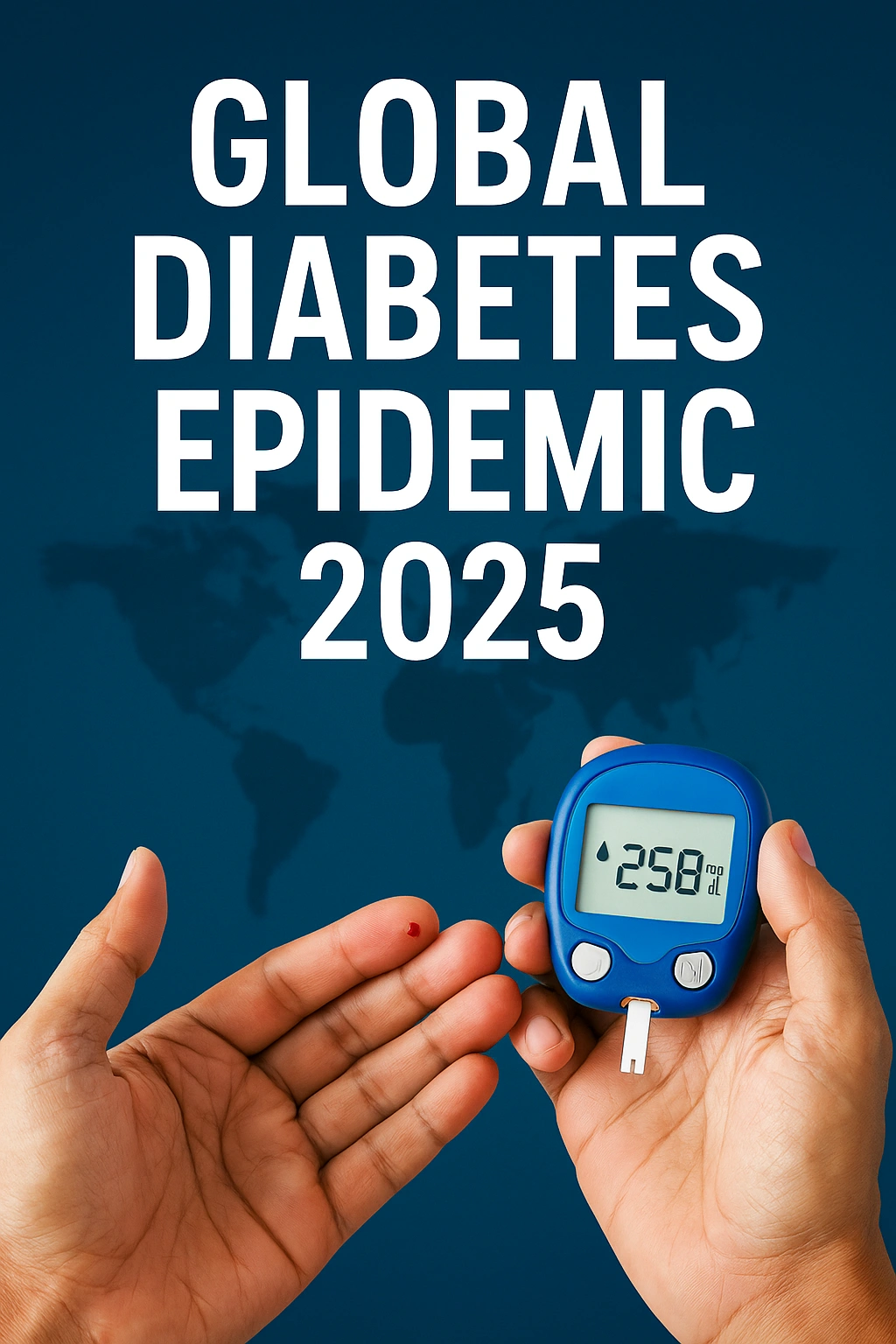
High blood sugar reading on a glucose meter highlights the rising cases fueling the global diabetes epidemic 2025.
You don’t hear sirens when it strikes. There’s no breaking news ticker. And yet, in 2025, diabetes is quietly overwhelming the world.In quiet hospital wards and overcrowded clinics across the globe, a slow-moving health emergency is unfolding. The global diabetes epidemic 2025 isn’t just a warning anymore—it’s our reality. From children in urban slums to seniors in affluent cities, diabetes is touching lives at an alarming rate. What was once considered a lifestyle disease of the privileged has now become one of the most widespread and misunderstood health crises of our time.
From Jakarta’s packed suburbs to the rural clinics of Uganda, the rise in diabetes cases has been relentless. The global diabetes epidemic 2025 isn’t just a health crisis—it’s a slow-burning catastrophe.It’s easy to talk about diabetes in terms of numbers—cases rising, budgets strained, years lost. But behind every statistic is a real story: a father skipping insulin doses so his daughter can eat, a teenager who learns too late why his vision is blurring, a mother who travels two hours just to test her sugar levels. The global diabetes epidemic 2025 isn’t just unfolding in hospitals or health reports—it’s playing out in living rooms, classrooms, and crowded markets. It’s personal, and it’s everywhere. The question is no longer whether the crisis is real. It’s whether we care enough to act—not just with medicine, but with empathy, equity, and urgency.
Table of Contents
1. A Crisis That Didn’t Creep—It Roared
Ten years ago, experts warned this could happen. Few listened.
Back then, diabetes was still viewed as a lifestyle disease—more nuisance than national emergency. Fast forward to 2025, and over 570 million people worldwide are living with it. The surge in type 2 diabetes, especially among teenagers and young adults, is something no public health model predicted—not at this scale.
What’s worse? Millions more are undiagnosed, unknowingly facing organ damage and complications that may arrive too late to treat.
2. What’s Driving the Surge?
Let’s be honest—it’s not just one thing.
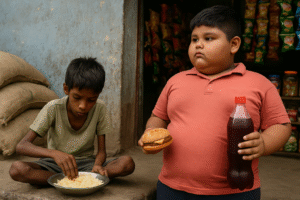
Urban life means more sitting and less walking. Processed food is cheaper than fresh vegetables in many countries. Fast food is everywhere. And even in middle-income households, knowledge about nutrition is patchy at best.
In parts of Kenya, a liter of soda costs less than a bottle of clean water. In the Philippines, entire meals revolve around instant noodles and rice because they’re affordable, not because they’re healthy.
Dr. Elena Moretti from Médecins Sans Frontières put it bluntly:
“Diabetes today isn’t about indulgence. It’s about inequality.”
3. A Quiet Killer with Loud Consequences
Unlike COVID-19, diabetes doesn’t spark headlines. It kills slowly—through kidney failure, heart disease, blindness, amputations. In India alone, over 70,000 limbs are lost annually due to diabetic complications. In the U.S., diabetes accounts for more than $400 billion in annual healthcare costs.
Globally, governments are straining to manage what’s become an economic sinkhole. Brazil and Egypt now spend more than 10% of their total health budgets on diabetes-related care. Yet prevention programs often remain underfunded or too small to make a dent.
4. Are Governments Doing Enough?
Short answer? Not really. Some are trying, but it feels like too little, too late.
India’s national diabetes screening mission aims to reach 100 million people by 2026. South Africa has launched mobile glucose units to reach rural patients. In Europe, sugar taxes and front-label warnings are gaining momentum.
But on the ground, the results are uneven. Policy is slow. Diabetes moves fast.
Dr. Yusef Khan, a global health advisor, summed it up:
“We’re throwing teaspoons at a flood.”
5. Insulin: A Century-Old Drug Few Can Afford
Here’s the cruel twist—insulin was discovered over 100 years ago. It should be cheap. Instead, in 2025, it remains wildly unaffordable for millions.
In many parts of Africa and South Asia, families skip meals just to afford a vial. In low-income countries, 50% of people with type 1 diabetes die within five years. Not because of the disease itself—but because they can’t access the medicine they need to live.
Despite biosimilars entering the market, prices haven’t dropped the way they should. Patent extensions and limited manufacturing keep life-saving insulin locked behind paywalls.
6. Glimpses of Hope, If You Know Where to Look
And yet—there are sparks of progress.
In Rwanda, drones now deliver insulin to remote districts in under an hour. In Vietnam, AI-driven blood sugar monitors are reducing hospital admissions. India’s network of local health workers is helping detect early-stage diabetes in schools and villages.
Technology helps. But so do simple ideas—like educating parents about breakfast, or helping street vendors switch to healthier oils.
The global diabetes epidemic 2025 is overwhelming, yes. But not unstoppable.
Also read about Indian Kabaddi Economy: From Mud Fields to Multicrore Dreams
7. Are We Really Losing the Fight?
That depends on where you look.
We’re losing when it comes to access and affordability. We’re losing where prevention programs are still stuck in paperwork. And we’re losing when children are developing adult-onset diabetes before their teenage years.
But we’re also learning.
Communities are pushing for local solutions. NGOs are stepping in where governments can’t. And slowly, the world is realizing that the global diabetes epidemic 2025 isn’t just a health issue—it’s a justice issue.
We can still turn this around. But it will take more than medicine. It will take political will, cultural change, and a global sense of urgency.
You can also check out Diabetes around the world.